When casting directors watch actor’s reels, they are looking for a few key things:
Acting Range: It’s important to show your range as an actor by showcasing different roles in your reel. Whether it’s comedy, drama, or action, make sure to highlight your versatility.
Professionalism: A well-produced reel shows that you take your work seriously. Make sure the quality is high and the editing is well done.
Authenticity: Casting directors want to see the real you. Avoid overacting or being too dramatic, be genuine and natural instead.
Storytelling: Your reel should tell a story. Start with a strong opening, build up to a climax, and end with a memorable moment. This will make your reel stand out.
Video Source: Wondershare Filmora Video Editor
Here’s a step-by-step guide for creating the perfect reel:
Choose Your Best Scenes: Go through all your footage and select the best scenes that showcase your acting range. Choose scenes with a clear story, strong acting, and good production quality.
Edit Your Reel: Edit your scenes together to create a cohesive story. Keep it short and sweet, no longer than 2-3 minutes.
Add Music and Sound Effects: Adding music can enhance the mood and emotion of your reel. Use sound effects to make your scene more realistic.
Get Feedback: Show your reel to actors, directors, and producers you trust for feedback. Take constructive criticism and make improvements if necessary.
Share Your Reel: Once your reel is complete, share it with casting directors, agents, and production companies. Use social media and online platforms like IMDb to promote your work.
I hope this helps you create the perfect reel! Good luck!
For aspiring professional actors, one of the few things we dread is sending in your self-tapes for film and commercial auditions. The slightest mistake could cost you a role in very significant productions. Therefore, it’s essential to get it right. In this article, we will discuss the best ways to record self-tapes and things to do and avoid when creating a self-taped audition.
What is a self-tape audition?
Self-tape audition, also known as a self-audition, is a recording of an actor’s performance submitted to a casting director. It’s used to evaluate the actor’s suitability for a role in a production. A self-tape is an alternative way for actors to audition themselves at their own convenience, in a location of their choice, and at any time.
What to do when recording a self-tape
Choose the right location and background.
The location and background should be as simple as possible. A blank wall is ideal instead of a busy background that can distract the casting director. The location should be silent and distraction-free to ensure the focus stays solely on the actor’s performance.
Set up the camera and microphone correctly.
The video and sound quality should be in high definition as casting directors are looking for clarity. The camera should be placed at the right angle to capture the face and body appropriately. It’s essential to invest in a good quality microphone to ensure the sound is clear. Test the equipment beforehand to ensure that it’s working correctly.
Pay attention to the lighting.
The self-tape should be well lit to ensure the best image quality. The light source should be at the front of the actor’s face, and there should not be any shadows. If possible, use natural lighting or invest in good quality lighting.
Memorize the script.
It’s important to memorize the script to ensure a smooth and natural performance. Use cue cards if necessary to help remember the lines.
Dress appropriately.
Dress in clothing that is appropriate for the role. Avoid wearing anything that is distracting or too flashy.
Video Source: The Actor’s Company
What not to do when recording a self-tape
Don’t improvise.
Stick to the script provided. Don’t try to be too creative. The casting director is looking for the actor’s interpretation of the character.
Avoid background noise.
Ensure the location is quiet and free of distractions. Avoid recording in areas that have street noise, loud music, or dogs barking. A quiet room is ideal for recording a self-tape.
Don’t rush through the lines.
Take your time with the lines and ensure the delivery is clear and natural. Speak clearly and pace yourself.
Don’t use effects or editing.
The self-tape should not be edited or have special effects. Keep it simple and straightforward. The actor’s performance should be the focus, not fancy editing or special effects.
Don’t look at the camera.
Avoid looking directly at the camera unless instructed to do so. The actor should focus on the imaginary point of focus for the character.
In conclusion, self-taped auditions are here to stay, and mastering the art of creating an impressive audition tape is crucial for actors’ success. The tips listed above will help you create a self-tape that stands out and ultimately increases your chances of getting casted. Remember, clarity, simplicity, and authenticity are key when preparing any self-tape auditions. Happy recording!
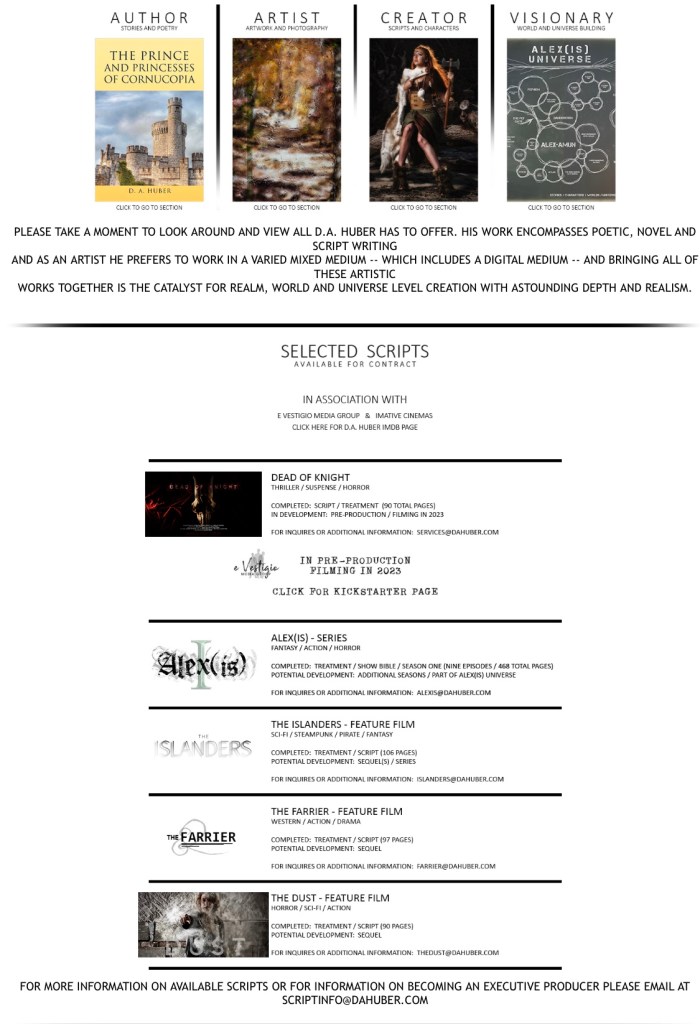
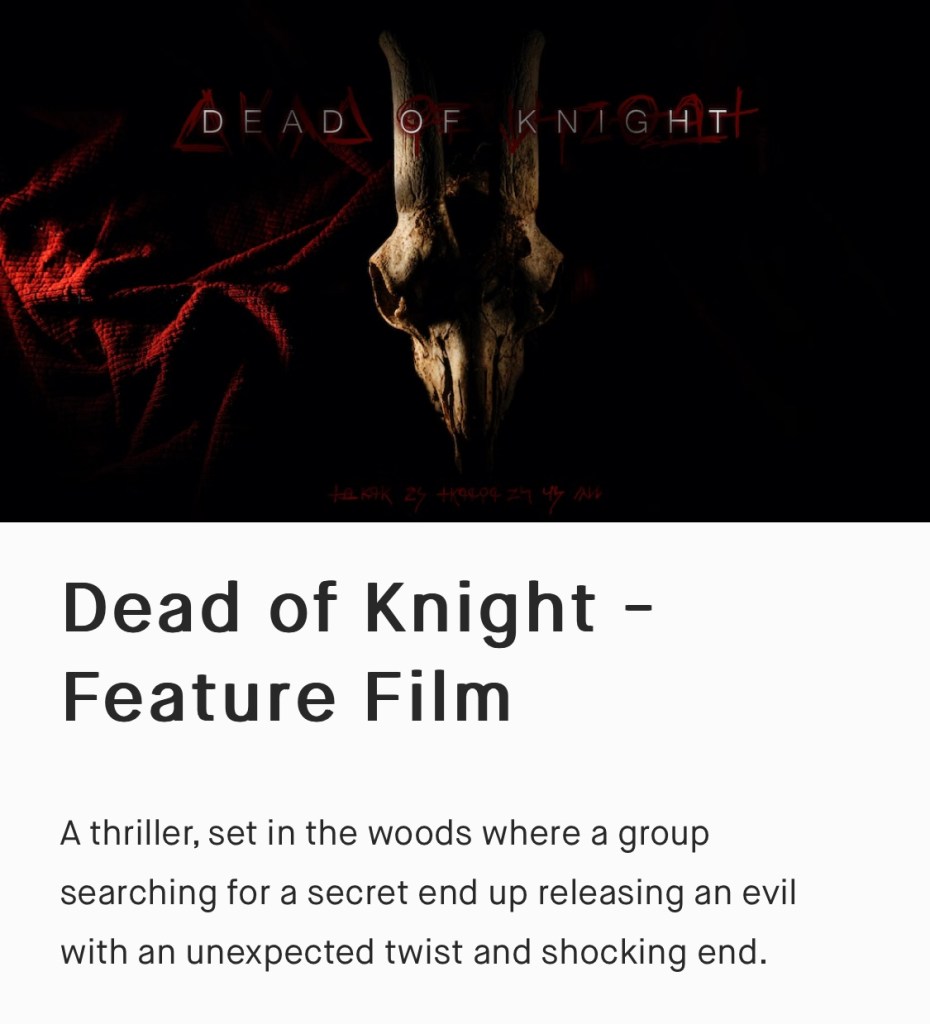
A good friend of PressPlay Cinema, Dave Hubber is working hard enough to make a studio millions! We talk about all his scripts, but today, we wanted to know more about his upcoming feature film, Dead of Knight. This is what he had to say; “As a writer, I find myself as a world builder and a storyteller — it is what I was built to do. In the last two years I have written a wide variety of scripts, in a range of genres, and with some deliberation with some close members, we decided to take the leap to produce our first feature-length film.
PPC: What was your initial thought behind the idea for Dead of Knight?
Dave: I have written several large projects prior to this one, and while working to move those into production, came to the realization that I needed to have a film completed and behind my name. So after talking with another member of PPC, Antonio J. Medina, one of my producers in LA, we decided that I would take a very strict set of rules and write a story that shit that framework. That particular framework was to write a high-quality well written, compelling feature length film on the absolute smallest budget I could possibly do. The result was Dead of Knight… which is a very compelling feature length film that falls into the suspense and thriller, genres and sort of feels like a whore at the same time, but with an excellent moral story under pinning the entire project with a and ending that I don’t think anyone really expected.
PPC: What kind of hardships do the character’s face?
Dave: This is slightly difficult to really answer. There are relationship issues and dynamics between several of the characters that come into play in drive some of her actions and motivations as the film progresses through to his completion. I don’t think anyone would watch Dead of Knight and not say that the creature or monster is not something that they are facing and dealing with as throughout the film it’s the most blatant antagonist. It is prepared it knows who and where they are, and it manages to be highly elusive in a place that the characters already are fearing being injured or attacked at. Psychologically they are dealing with fear of the area, and then fear of the monster, and then fear of hurting other people and that will drive their anxiety to a point where they can make mistakes if they’re not careful.
PPC: What is your favorite thing about this film?
Dave: There are several aspects to Dead of Knight that I really enjoy as a storyteller as a Director and it’s hard to really single out specific ones. I feel like some of the story arcs were very fun, but if I had to really narrow it down, I would say that the challenge of creating such a compelling and complete feature film under such tight constraints, was actually one of the favorite things about this project for me. Being able to lay it out and plan the script and create characters and a story in an environment and craft it in such a way that I can convey the anxiety and fear and confusion while simultaneously showing you don’t need $1 million budget to create an absolutely stunning and complete film.
PPC: What message are you sending to the masses?
Dave: This question is probably the most difficult for me to answer without giving too much of the plot away in the film. That being said, I feel this film was designed in part two showcase human nature, and not necessarily the bright and shiny parts. Another part I believe I can mention without giving too much away, is that it really illustrates the risks that people will take an effort to obtain something they feel has value and the links that they will go to get it, and the dangers they may disregard.
PPC: What hardship have you face while brainstorming a script?
Dave: I think the greatest hardship I personally had to face was dealing with the constraints that we had and balancing that with creating a very well crafted finished filling. So isolating down essentially one location that we were able to get 90% of the film done. I think the second hardest part had to do with the creative vision I have — the end product visually I believe will be different from what you might traditionally expect however, I feel that it is very complementary to the story that’s there and when you look really close microscopically, almost I think you’re going to start to see some of the nudges that are there.
We ask for a longline, but Dave told us that he hasn’t think of a longline for selling purposes yet, to be able to summarize such a broad story. I think we’ve all been there. Perhaps you can help him to think of one by checking the synopsis of this project and all of Dave’s creations here: http://www.dahuber.com/
Support D.A. Hubber Kickstarter fundraiser by clicking this image!
The Writers Guild of America (WGA) strike is currently ongoing, as writers continue to fight for better pay and better working conditions in the entertainment industry. The WGA represents thousands of writers across the United States, who work in a variety of industries including film, TV, and digital media.
At the heart of the dispute between the WGA and industry executives is the issue of fair compensation for writers. Many writers argue that they are not being paid enough for their work, especially in light of the huge profits generated by the entertainment industry. Additionally, many writers claim that they are being forced to work long hours with little rest, which can lead to burnout and even health problems.
To address these concerns, the WGA has been pushing for a number of reforms. These include higher minimum wages for writers, more opportunities for healthcare and pension benefits, and stronger protections against harassment and discrimination in the workplace.
Despite the efforts of the WGA, however, progress has been slow. Industry executives have been reluctant to make any significant changes, arguing that the current system is already fair and equitable. As a result, the strike has continued for several months, with no resolution in sight.
The WGA strike highlights the challenges faced by workers in the entertainment industry today. While some progress has been made in recent years, there is still a long way to go before writers and other workers in the industry can be assured of fair pay and working conditions.
Video Source: Yahoo Finance
The WGA members are hoping to achieve better compensation for their work, as well as improved healthcare, pension benefits, and job security. They are also seeking to address issues related to diversity and inclusion in the industry.
Members of the WGA can take several steps to gain power and achieve better compensation during the upcoming strike. Here are some suggestions:
Build solidarity among members: Members of the WGA can build solidarity by attending meetings, rallies, and picket lines. They can also support each other by sharing information, resources, and strategies.
Use social media: Members can use social media to raise awareness about the struggles of the WGA and to mobilize support from the wider community.
Negotiate with producers: The WGA can negotiate with producers to secure better compensation and working conditions. This can be done through collective bargaining, which involves the WGA negotiating on behalf of its members.
Seek support from other unions: The WGA can seek support from other unions, such as SAG-AFTRA and the DGA, which have similar interests and goals.
Use legal means: Members can use legal means, such as filing grievances and lawsuits, to challenge unfair treatment and discrimination.
Engage in political activism: Members can engage in political activism by lobbying lawmakers and policymakers to support the rights of writers and other entertainment industry workers.
By taking these steps, members of the WGA can gain power and achieve better compensation during the upcoming strike.
While the charges against Alec Baldwin in the “Rust” movie shooting incident have been dropped, it is difficult to predict the long-term impact on his career. Here are some cons that may affect his career:
Negative public perception: The incident has garnered widespread media attention, and many people may view Alec Baldwin negatively as a result. This negative perception could impact his future work opportunities and overall reputation.
Legal repercussions: While the criminal charges have been dropped, there may still be civil lawsuits or other legal actions taken against Alec Baldwin. This could result in significant financial and legal repercussions.
Difficulty in obtaining insurance: After the “Rust” shooting incident, it is possible that Alec Baldwin may have difficulty obtaining insurance coverage for future projects he is involved in. This could make it more difficult for him to secure work in the entertainment industry.
Loss of trust: The incident may result in a loss of trust from colleagues in the industry, which could make it more difficult for Alec Baldwin to work with others in the future.
While the charges against Alec Baldwin have been dropped, the incident may still have a negative impact on his future career prospects.




 PressPlay Cinema, LLC